Hello everyone! In this post, we will outline some key terminology and their definitions as it relates to Medieval Islamicate astrology, what it encompasses, and it's connection to the larger history of astrology to help bring clarity to people who may be confused on what these terms mean or have never heard them before.
Medieval: Chronology, refers to the time period astrology was developed from the 5th to 15th centuries in the pre-modern world. Medieval means middle ages in Latin, refering to the time after the Fall of the Roman Empire and before the Early-Modern period.
Islamicate: Tradition, coined by historian Marshall Hodgson to denote regions of the world where Islam is dominant, but not limited to the religion of Islam in order to encompass non-Muslims who are still influenced by Islamic cosmology, culture, and society. Islamicate is used as opposed to Islamic since Islamic is a more direct reference to Islam the religion itself, rather than the culture and society that is influence but not directly Muslim.
Astrology: Field of Knowledge, "the knowledge of what the power of the movements of the stars at a specific time indicate for that time, and for a specified future time", according to Abu Ma'shar Al Balkhi in the Great Introduction
Geographic Designation
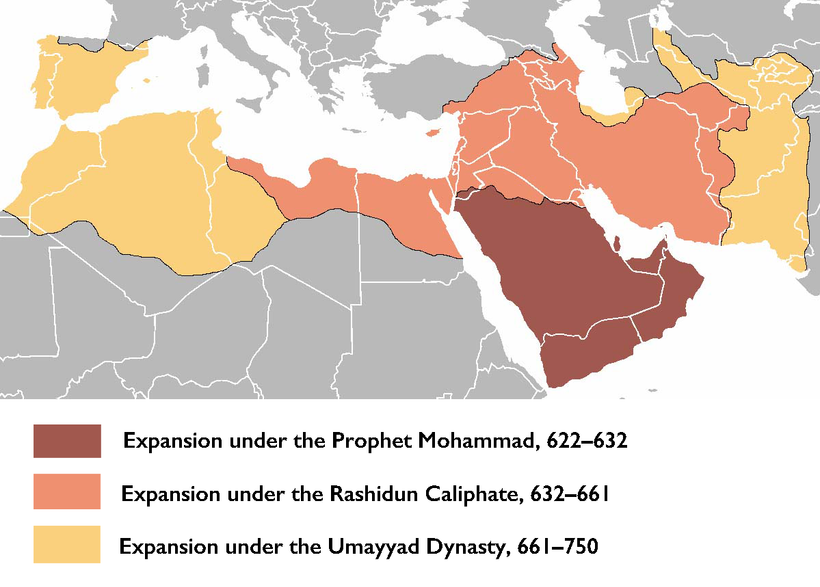
Astrology from this time period and region of the world is multi-cultural because the empires are also multi-cultural and their capitals are cosmopolitan cities. It is made up of more than just Arabs or just Muslims. Arab astrology is more exclusionary as a term. Muslim astrology is also equally as exclusionary. The Islamic caliphates conquered over a wide array of religious and ethnic groups including: Muslims, Christians, Jews, Buddhists, Sabians, Hindus, Zoroastrians, Mandaeans, Manichaeans, Polytheists; also Arabs, Indians, Persians, East Africans, Syriacs, Egyptians, Turks, Kurds, Amazighs, Slavs, Greeks, Armenians, and more.
When we use the term Islamicate, we reference these cultural, religious, and ethnic groups that are influenced by the Islamic Caliphates, but not themselves Muslim or Arabs. By using this terminology, we acknowledge shared practices and culture, specifically within the astrological tradition, without flattening and erasing identities.
Afro Asiatic Traditions
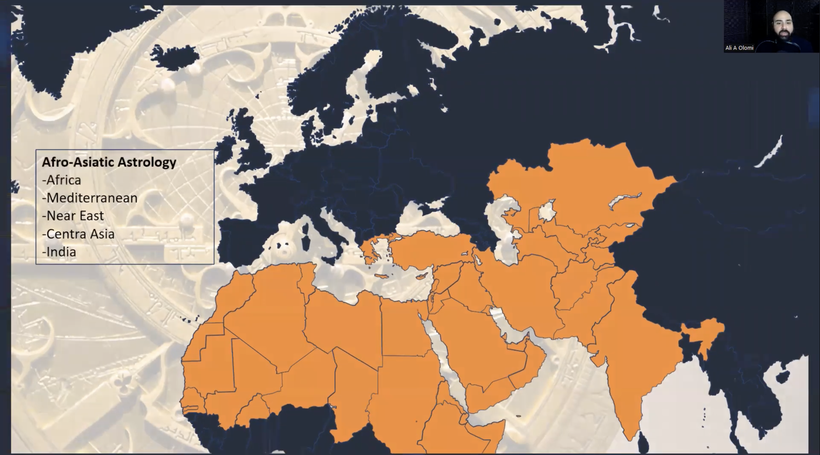
The Islamicate tradition is a smaller part of what Dr. Ali A. Olomi coins as the larger Afro-Asiatictraditions of astrology. This refers to the astrology developed in Africa and Asia including Hellenistic, Islamicate, and Indic astrology. These traditions share
1) Commonality of practice: how each tradition individual practices astrology. A blend of natural and symbolic time, Signs as Houses, and Subdivisions of the zodiac.
2) Sources: the texts or teachers they draw from. In these traditions, it is both a textual and oral tradition of astrology.
3) Lineage: where astrology is learned from. In these traditions, it is primarily from Teacher-to-Student or passed on via family inheritance.
4) Location: Places of development influenced by religions, dynasties, and empires. In these traditions, it is cosmopolitan centers that have a blend of many cultures, religions, and ethnicities.
Hellenistic and Islamicate
Both Hellenistic and Islamicate astrology have a lot of similarities in the function that each term plays as a descriptor:
Hellenistic: A term used to refer to regions of the world influenced by Greek culture, art, and history after the conquests of Alexander the Great, but not limited to just Greeks
Islamicate: A term used to refer to the regions of the world influenced by Islamic culture, art, and history of the conquests of the Islamic Caliphates, but not limited to just Muslims or Arabs
We use Hellenistic Astrology to refer to the spread of astrology in the Mediterranean, Levant, and Africa while not all these people may have been Greek. However, because the lingua franka of the time was Greek and we saw the spread of Greek culture and ideas, we can acknowledge that binds these people together is the influence of Hellenism. Islamicate is the same in the function it plays as a descriptor. They encompass many cultures and people, while recognizing the dominant culture of the time due to governance of empires, religions, and dynastic rule.
Inheritance of Practice
Islamicate Astrology inherits its knowledge from 4 major existing branches of astrology: Hellenistic, Persian, Babylonian, and Indic sources.
Medieval Islamicate astrology develops as the Abbasid empire conquered the Sassanians, Umayyads, and parts of the Byzantine empire, preserving the local customs, knowledge, and traditions that already existed. It is the inheritor of Hellenistic, Persian, Babylonian, and Indic astrology, synthesizing them into a cohesive system under a Qura’nic cosmology that becomes what we modernly know as “traditional astrology”. There is no traditional astrology without the Islamicate world.
Important Figures in Medieval Islamicate Astrology
Medieval Islamicate astrology develops primarily through 4 influential figures in the pre-Islamic and post-Islamic world:
Dorotheus of Sidon: Islamicate astrologers will trace their foundations of horoscopic natal, electional, and interrogational astrology through Dorotheus of Sidon and his writings in the Hellenistic period in Alexandria, Egypt.
Al-Andarzaghar: A Sassanian astrologer working within the Persian tradition, inheriting from Hellenistic and Indic astrologers, who significantly develops natal astrology, world astrology, and continuous horoscopy. Most Islamicate astrologers will cite and reference Al Andarzaghar, though his work doesn't survive in whole to this day.
Mashallah ibn Athari: A Persian-Jewish astrologer from Khorasan working for Khalif Al Mansur who helped picked out the founding horoscope for Baghdad when he was only 21. He ushered in significant developments in natal, electional, interrogations, and world astrology.
Abu Ma'shar al-Balkhi: A Persian Muslim astrologer from Balkh who becomes the most influential astrologer in world history, cited over 100 times across various traditions and texts from Europe to Asia, and Africa. Culmination of ‘traditional’ astrological practices happens under his advancement and synthesis from a huge library of sources collected by the Banu Musa.
These astrologers participate and give rise to a few important schools and families of astrology who serve at the court level and influence astrological literature and development:
Nawbakhti Family: The Nawbakhtis are a family of astrologers that serve at the court level for Caliph Al Mansur. They set a foundation for astrology that can be approached systematically.
The Banu Munajjim: Once the Nawbakhtis fall from grace happens with an incorrect prediction, the Banu Munajjim who have ties to Al Andazarghar rise in their place and serve Caliph Al Ma’mun in the Abbasid Civil War.
The Balkhi School of Astrology: The Nawbakhti school and Banu Munajjim are inherited by Abu Ma’shar who founds the Balkhi school with 7 different lineages coming out of it. 2 lineages have died out but 5 still exist to this day. I am currently studying with my teacher who is formally trained in one of these existing lineages from the Balkhi school.
Branches of Astrology
The practice of Islamicate Astrology is composed of 4 branches that are formalized into systems of knowledge that can be learned, studied, and taught:
Mawalid: Nativities, the application of astrology to birthdays to understand the life trajectory of a person.
Ikhtiyarat: Elections, the application of astrology to decision making, picking the best alignment of the planets to time actions to.
Masa'il: Questions/Interrogational astrology, the application of astrology as divination to answer burning questions by casting the horoscope of the moment.
Qiranat: Conjunctions, (referring to World Astrology) the application of astrology to understand world events, rise and fall of empires, religions, and dynasties through the Saturn-Jupiter conjunctions.
They include use of the following and more: 12 Zodiac signs, 12 Houses, 5 Aspects, 7 Planets + 2 Nodes, the Tropical Zodiac, the Arabic Lots, Whole Sign Houses, Tropical Lunar Manzils, Decans, Bounds, Nawbahra, Dodecatemoria, Assemblages, Primary Directions, Fardars, Transfer of Years, Solar Returns, Monthly Returns, Monthly Transfers, Continuous transfers, and more.
Conclusion
In short, we prefer the term Medieval Islamicate Astrology because it is the most accurate in encompassing the multi-cultural, ethnic, and religious make up of this astrological tradition that is not limited to Muslims or Arabs. Astrology is an inherited wisdom tradition with contributions from many different groups of people. What unifies these people together in the Medieval period is the influence and cosmology of Islam and its empires which is prevelant in their works, history, and development even if they themselves are not Muslim.
